There are four principal concerns with the 2026 regulations for heat pump hot water installation in Australia: employing licensed trades, adherence to the Plumbing Code of Australia and Australian Standards, observing electrical and plumbing safety, and site suitability for the unit. In brief, to be in compliance here one will generally have an outdoor system put in by the professionals, complete with the proper clearances, drainage, tempering and a sound electrical connection, plus all the documentation for any rebate or inspection that may come down the line.
Brodie Langridge
It is a topic that has a way of tripping people up. The sales talk is straightforward enough but you can find the install turning into a rough as guts affair in no time. Much like other practical equipment in this country, the brochure will promise you sunshine and savings; the reality is you have to contend with noise, condensate, the odd council quirk, access and airflow, and an installer who does not make a habit of winging it when it comes to local rules.
The 2026 Changes
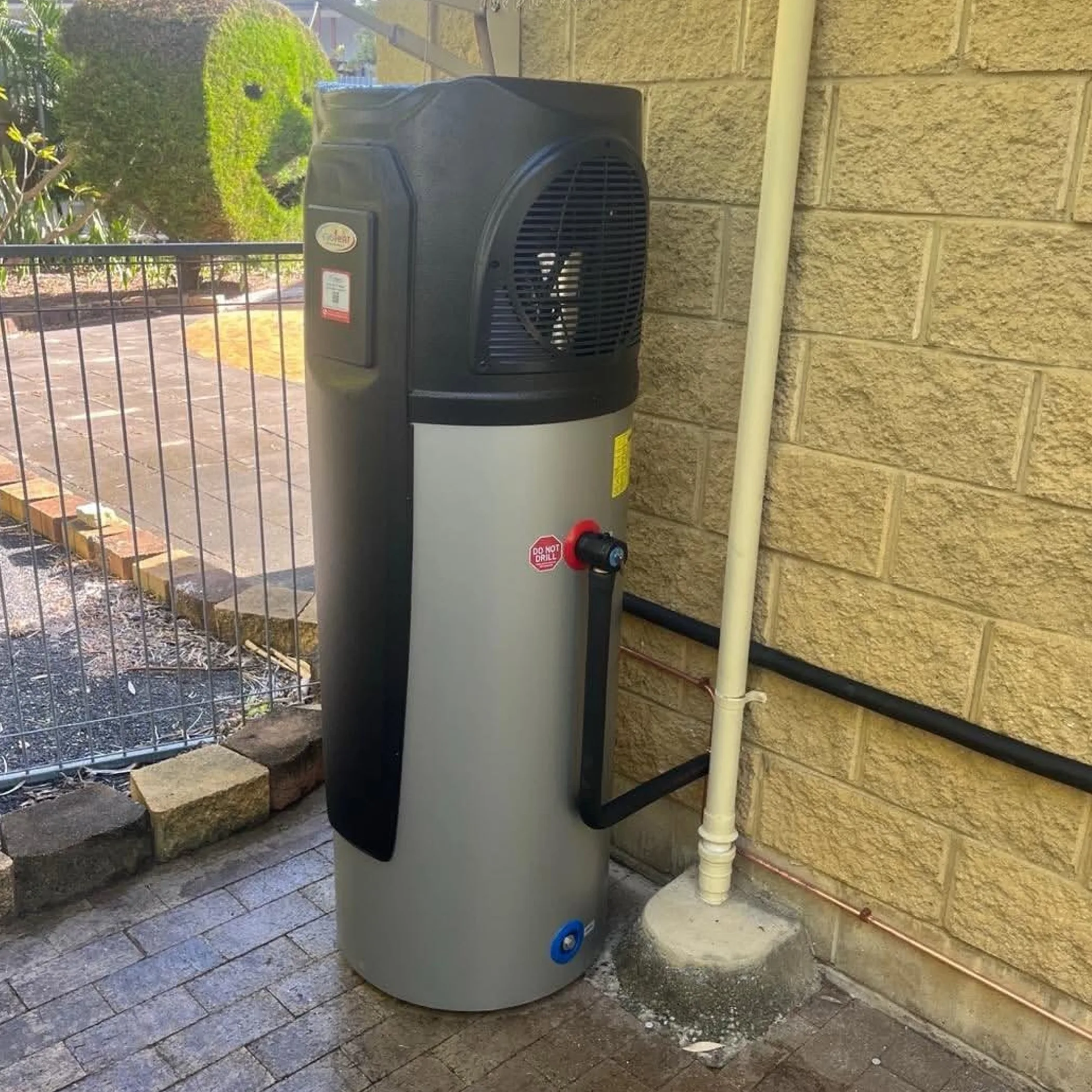
Do not expect some sweeping national edict in 2026. What you will see is a closer eye on efficiency, what products are eligible, state incentive conditions and whether the installer is up to code. For the householder the change is you can no longer purchase a unit, put it in place of the old tank and think you are done.
Now it is a question of minimum energy performance, eligibility for federal or state schemes and an installation that holds up to the PCA, AS/NZS and the manufacturer. When considering heat pump hot water noise management, it has implications for your costs, warranty, the chance of noise complaints, resale value and if you can claim a rebate.
Putting the Rules in Perspective
Australia’s 2026 regulations for heat pump water heaters demand both a compliant product and a compliant way of installing it. Put a top rated unit in a tight corner, too near a bedroom window, without tempering or in the hands of an unlicensed operator and it is a problem.
Most would be at fault for thinking the unit is where the compliance ends. It does not. The pipework, the site, how the valves are arranged, electrical isolation, the path for noise and drainage are all part of it.
A Snapshot of Compliance
Consider this the plain-English version, the packing list rather than the fluff, before you go about getting quotes.
For the majority of homes it is simple provided you do things in order. Get a compliant unit, check the site, have a specialist or team with the necessary licences for their plumbing and electrical work put it in, and you will have your compliance certificate and certification to show for it.
| Compliance Area | What you will find in 2026 | Where people get caught out |
| Product Approval | Relevant Energy Rating and MEPS for heat pump water heaters must be met. | An imported model of questionable approval. |
| Plumbing | Heated water services to be in accordance with AS/NZS 3500.4 and the PCA. | Tempering omitted, relief drains poorly routed, wrong valves. |
| Electrical | A licensed electrician to handle the connection. | Underestimating upgrade costs, problems with the isolation switch or an unsuitable circuit. |
| Location | Local rules, ventilation and the manufacturer’s mounting clearances. | Encroaching on boundaries or windows, putting it in an enclosed area. |
| Drainage | Valves and condensate must be disposed of and discharged in a safe manner. | Damage from water on a slab edge or path. |
| Rebates | STC, VEU and other programmes have their own stipulations for product and installer. | To assume a given unit will qualify in every instance. |
Matters of Installation
You will not be doing this with tinnies and cable-ties. By and large in Australia the plumber must be licensed for the plumbing and an electrician for anything electrical. There are firms that will book the whole job for you which is more convenient, yet the licence requirement for each trade remains. And as I would say, if they are vague on the certificates and licence classes when you enquire as to who is “doing the lot”, then it is time to take a step back.
Questions to put to them before work commences
Find out who is minding the plumbing and the wiring, if a new circuit is in order or if tempering valves are part of the package, and what compliance documents will be put in front of you. Make sure to ask if the installer is versed in your state’s rebate rules; there is no point in having a system that works on paper if shoddy paperwork disqualifies it from incentives.
On a strata property or where suburban lots are at a premium, inquire as to whether they have any background with placements that have to be neighbourly. You would be surprised how much of an issue that can be.
Standards And Rulebook
The job is only as good as its adherence to the rulebook. An install that does not conform to the codes is nothing but sales patter in work boots.
By 2026 one will most often be looking at the National Construction Code framework for the heat pump installation rules of the Plumbing Code of Australia, AS/NZS 3500.4 in respect of heated water services and the electrical standards and regulations of the state. Then there is the national E3 framework for heat pump water heaters and the Energy Rating system which dictates product efficiency, all under the policy watch of the DCCEEW and the Energy and Climate Change Ministerial Council.
Documents To Be Aware Of
When the subject of AS/NZS hot water standards comes up, AS/NZS 3500.4 is the usual place to begin for design and installation principles. The PCA has its part to play in broader performance. Do not overlook the manufacturer’s instructions either; they carry legal weight. Should the standard be general and the manual more exacting on an installation detail, to disregard the latter is to risk non-compliance.
For a read on the latest in national energy efficiency, the DCCEEW Energy Rating is a good reference, particularly in seeing if a model is in keeping with scheme expectations and minimum performance standards.
Matter of Location
Expectation and reality have a way of diverging here. One might think a heat pump will fit where the electric tank was, but then noise, drainage and the like put paid to that notion. As a rule of thumb the units are for outdoors or in spaces the maker has given the nod to for ventilation. “Will you put it in the house?” is a question that will be met with a firm no unless the product is made for it and every safety and ventilation box is ticked.
Ventilation And Clearances
Every brand and model has its requirements but the idea is universal: give the unit room to do its job and allow for servicing. Tuck it into a side passage or some sealed off utility room and you will see performance drop and noise and maintenance issues appear.
A stable base is required too, a flat pad on an older home with its uneven surfaces will stave off vibration. I have seen enough in the north over the years to know that in the face of the heat and humidity, bad drainage and a poor foundation will make a mouldy, rusty mess of an otherwise tidy job in short order.
Logistics
There has to be room for the installer to get at the unit and around it. A side gate that is narrow, stairs, retaining walls or a lack of parking nearby will slow things down and add to the labour bill. A simple replacement should be done in a day, but you can put that timeline in jeopardy with slab work or a switchboard upgrade.
Do not discount parking. In an inner-city terrace or on a battle-axe block the crew may not be able to unload close by and you will have delays. It is much like assuming a tour stop is five minutes from the Stuart Highway when it is in fact remote.
Safety And Plumbing
Now the cylinder becomes a legal hot water service. Discharge points, scald protection, pressure and temperature control must be attended to.
In Australia the storage temperature is set to mitigate health risks, yet what gets to the bathroom and certain fixtures has to be brought down to a safer level per the rules, hence the use of tempering valves. A typical set up will have the tank running hot and deliver tempered water to the bathrooms. The precise make up of the system is a function of the building and jurisdiction and is not something to be left to chance, as errors are both a compliance and a safety matter.
The discharge from pressure and temperature relief valves needs to be right and find a safe, lawful outlet; the rule is no different for getting rid of condensate. An installation that meets the standards will not have water running where it could cause a slip or wear things down, nor will it leave a pool near the footings or put drips in one’s path on a regular basis.
Electrical Side Of The Job
When one is comparing quotes, the electrical connection part of the equation is prone to being undervalued. Should the former system have had an older cabling job, a controlled load set up differently or a dissimilar load profile, there may be a need for the electrician to put in some circuit upgrades, protection or isolation.
It is the cheapest quote that can be misleading by taking for granted the existing supply is in order, only for you to be hit with additional charges once the old unit is out of the way. Make sure to put to the installer whether a switchboard review and any probable upgrade are part of what is being quoted.
Certificates, Ratings And Incentives
There is no point in leaving the paperwork to chance when putting money down on a heat pump. You want your compliance documents to stand up to an insurer, a rebate body or a buyer should an argument arise.
Upon completion the licensed trade will provide the necessary installation records and any certificate or compliance document your state or territory calls for. With systems that qualify there is also the matter of STCs, Energy Rating data and what the state program demands.
Rebates And Product Eligibility
One will not find uniformity in VEU rules or heat pump hot water rebates from one end of Australia to the other. A household might be in a position to take advantage of federal support like STCs, or perhaps some state incentive by virtue of location, the product or the installer. In Victoria the VEU register is of some consequence; in the ACT it is the Climate Choices (ACT Government) site that has the local scheme context.
Product regulation and efficiency criteria are in a state of flux so there is much talk in the market of E3 settings and DRIS consultation heat pump water heaters. For the householder the message is plain: see if the model and the installer arrangement are in order before the work commences rather than after the invoice arrives.
Rheem and STIEBEL ELTRON are names that come up often in Australia and consumers will use SolarQuotes or Solar Choice to weigh up the claims and features. Take them as a beginning but not the end of the matter; the official scheme criteria are what count.
State Differences That Matter
Hot water rules are an area where Australia is not adept at a one-size-fits-all approach. While the national framework has its place, the state and territory can put their stamp on licensing, notifications and the finer points of compliance. A system that is eligible in Victoria may not be so in Queensland or WA. Get confirmation on the local layer as well as the national requirements before signing.
How The States Vary
Proximity to neighbours and the layout of a suburban block mean siting and sound are common concerns in NSW and VIC, the latter also being more consumer conscious about VEU eligibility. Economics of replacement and rebate are of prime importance in the ACT, especially with the cost of an electric upgrade being weighed against gas phase-down. Then in Queensland a brochure will not tell you how important placement, corrosion resistance and drainage are in the face of storms and humidity.
WA has its own market dynamics and installer availability away from Perth, and in SA and Tasmania climate performance is viewed differently. In any regional corner of the country you may find a dearth of qualified installers which translates to longer waits and travel fees, a less attractive aspect of making the move to efficient hot water.
Managing Sound Before Trouble Starts
Nothing will make a sensible upgrade into a saga with the neighbourhood quicker than a noisy unit. They are not deafening as a rule but they are not quiet, and a poor choice of location will make that worse.
Noise management is something to attend to well in advance of switching the unit on. Put a fan or compressor in a hard reflective corner or outside a bedroom window and a compliant product will be an irritation at night.
What Usually Works Best
Take the published sound figures for the model in question and measure them against the unit’s proposed position vis a vis outdoor living areas and bedrooms. You will get better results with some separation, stable mounting and an anti-vibration setup, and by not creating an echo chamber. Decibel numbers are not the whole story, as most would have it. One should not overlook the character of the sound. In an open area a marginally higher rating is preferable to a low hum in the wrong place which can be a nuisance. Managing the noise from a heat pump hot water system is as much common sense as it is technical.
A Homeowner’s Checklist
When you are in the market for quotes, run them through this compliance checklist to spare yourself some of the back-and-forth. It will not replace the counsel of a tradesman but it is a good way to tell if a quote has any substance or is flat as a pancake.
- Make sure the product is up to current minimum energy performance standards and right for Australian conditions.
- Verify that your installer has the proper plumbing licence and any electrical work is in the hands of a licensed electrician.
- Get in writing the method for condensate disposal, ventilation requirements and mounting clearances for the site.
- You want to see the quote cover commissioning, removal of the old unit, valves and tempering as needed, and electrical connection.
- Before you commit, look into rebates: STCs, VEU register status where it applies, and what evidence the state may call for. And ask what sort of certification and compliance certificate is on offer once the job is done.
Reality Checks, Drawbacks and Costs
There is no magic to a heat pump, even if they do save on energy. A heat pump hot water system has its downsides: the cost of purchase and installation is steeper to begin with, there is the question of noise, space and airflow, and in some cases a slower recovery. They are more particular about siting than a basic resistive electric tank.
To those in Canberra who put it bluntly and ask how much it costs to have one installed, the truth is total installed costs are all over the map. Tank size, brand, electrical work and the treatment of rebates will make a difference; an all-in price can be several thousand dollars out between a straight swap and something more arduous. Put simply, most Australian households are looking at a few thousand dollars before incentives come into play, but an exact quote is only valid for that particular site.
The Ideal Candidate
For the household that has the outdoor room and is prepared to put down more money up front for the sake of lower running costs, this is the way to go. Where access is bad and drives the cost up, or neighbours are unduly sensitive to noise, or a well ventilated spot cannot be found, it is not so well suited.
In a day or two one can cut to the chase by focusing on three things: written rebate eligibility, the credentials of the installer and whether the site is right for it.
Frequently Asked Questions
As a rule the answers to these are not as neat as the advertising would have you believe.
Is it possible to put a heat pump hot water system in the house?
Not as a matter of course. While some systems get the nod for a semi-enclosed or internal location, provided the manufacturer and code requirements for noise, ventilation and condensate are satisfied, for the majority of homes it is safer to put it outside or in a place with good ventilation.
What does installation entail?
At the very least you need a compliant product and the services of a licensed plumber and, where necessary, an electrician. There will be requirements for stable mounting, clearances, lawful drainage, tempering valves and the like, and final documentation to show compliance. The rules of the state may impose further conditions on the product or installer for a rebate.
What are the disadvantages?
Compared with replacing an electric storage unit there are more variables and the upfront price is higher. You may encounter some noise and the system can be finicky in certain climates or locations. But with a proper install it remains a fine option.
Canberra installation costs?
Do not expect a fixed price. It is a function of the model and tank, access, any switchboard or circuit work and rebates. Households here should be comparing the total installed cost against the unit price and check what the ACT has in the way of incentives before putting pen to paper.
Does the council have to approve a heat pump?
Not in every case, but then again local rules and planning, strata bylaws, heritage or acoustic controls can come into play for some properties. For townhouses and apartments, or anything visible and close to a boundary, it is worth checking first if your block is of a shared or tight nature.
Practical Wrap-Up
One does not deal with the 2026 Australian regulations for heat pump hot water installation by poring over a brochure; a practical organiser is what is called for. To put in a system that is compliant you will want the proper product and the proper trades, as well as the correct location and all the paperwork. Should any of those be wanting, an “efficient upgrade” has a way of becoming a source of complaints or callbacks, or even a forfeited rebate.
Put it to a mate at an iced coffee in Nightcliff and the advice would be straightforward: pick a model whose Australian credentials are in order, have the site assessed before you go with the lowest quote, be forthright in your questioning on matters of noise, drainage and electrical work, and hold on to every certificate. In the end one is much better off with hot water that functions without any fuss.
